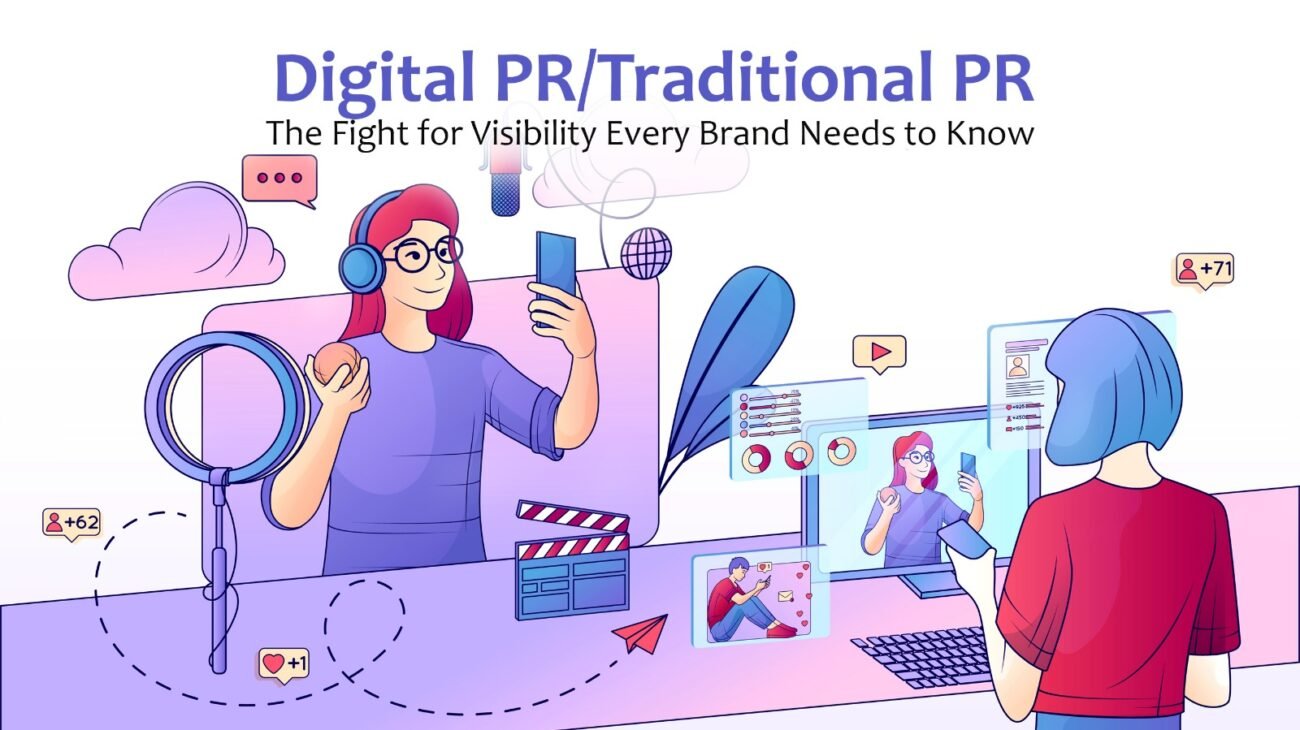
Digital PR vs. Traditional PR: The Fight for Visibility Every Brand Needs to Know
In the evolving world of communications, Public Relations (PR) has expanded far beyond press releases and newspaper headlines. Today, brands are navigating an entirely new landscape—one where visibility depends on both online influence and offline credibility. This shift has sparked a key question:
Digital PR vs. Traditional PR-what’s the difference, and which one does your brand really need?
Let’s break it down.
Traditional PR
Traditional PR focuses on offline media channels and long-established communication methods. Think:
- Newspapers & magazines
- TV & radio
- Press conferences
- Printing features
Special events such as; i. Industry events
The goal? Earn media coverage and shape public perception through trusted, mainstream outlets.
Strengths of Traditional PR
- High credibility owing to established media
Great for brand legitimacy and mass visibility. - Powerful Impact for Corporate Stories, Launch, & Public Announcements
- Mainly suited for older or wider audiences
Digital PR
Digital PR leverages online platforms to build brand awareness, reputation, and engagement. It uses:
- Online publications & blogs
Social Media Magnification
Increased influencer collaborations - SEO-driven content
- Viral campaigns
- Online press releases
The goal? Boost online presence, increase search rankings, and create conversations in digital spaces.
DS Digital PR Strengths - Highly measurable with real-time analytics
- Wide and specific reach of audience
- It can drive website traffic and improve SEO.
- Ideal for younger, tech-savvy audiences
- Speedier execution; more flexible campaigns
Key Differences Between Digital PR and Traditional PR
1. Platforms Used :
- Traditional PR: Offline media
Digital PR: means online channels.
2. Speed & Agility
- Traditional PR: Slower; relies upon editorial schedules
- Digital PR: Fast; content can be released instantly
- Measurability
- Traditional PR: More difficult to track impact
- Digital PR: Easy to measure through analytics, engagement, and SEO metrics
4. Engaging the Audience
- Traditional PR: One-way communication
- Digital PR: Interactive and shareable
5. Longevity
- Traditional PR: High short-term impact
Digital PR: Long-term visibility through search engines and evergreen content
Do You Need Digital PR or Traditional PR?
Traditional PR if you want to:
✔ Strong brand credibility
✔ Wide mainstream recognition
✔ Significant launch announcements
✔ Corporate communications
They want to work in Digital PR because:
X Higher visibility online
✔ Improved website traffic ✔ Strong SEO presence ✔ Engaging the Digital Audience Most brands require both in some measures. A hybrid strategy allows you to appear in offline media for credibility and dominate online channels for reach and engagement. When both work together, your brand becomes unmissable.
Final Thoughts
Digital PR and Traditional PR aren’t competitors—they’re complementary tools. While traditional PR builds trust and authority, digital PR amplifies reach and fuels constant visibility. Brands that integrate both create powerful, multi-channel presence and stay relevant in an ever-changing world. To succeed in today’s attention economy, don’t pick one-merge the best of both